
RICH GAMES / CHOOSING A GAME
Games like Sudoku: six logic puzzles to try next
Find your next puzzle by its reasoning: Kakuro sums, Nonogram pictures, Minesweeper neighbours, Mastermind feedback, Lights Out switches and arithmetic grids.

Enjoy the moment when several Sudoku constraints leave one possible answer? Other puzzles offer that moment too. Instead of a long catalogue of names, here are six different reasoning tasks: what you notice, what you decide and how each changes the familiar nine-digit experience.
Work out which part of Sudoku you enjoy
Enjoying Sudoku does not necessarily mean enjoying arithmetic. Its digits stand for distinct symbols; you do not need to add them. Some players like eliminating candidates, others enjoy surveying a large grid, and others prefer starting with one small, manageable area.
Keep your favourite part and change the rest. Kakuro and Mastermind reward tracking possibilities. Nonograms combine information from rows and columns. If you want a single press to change several cells at once, try Lights Out.
| Puzzle | Main clue | The change from Sudoku |
|---|---|---|
| Kakuro | A run’s total | Consider combinations of digits |
| Nonogram | Lengths of filled blocks | The answer becomes a picture |
| Minesweeper | Adjacent mine count | Find a safe cell |
| Mastermind | Feedback on a guess | Your choice produces new clues |
| Lights Out | Which lights are on | A press affects neighbours |
| Math cross | Expression results | Operations and evaluation order matter |
Kakuro: when you want the digits to do arithmetic
Kakuro resembles a crossword with digits instead of words. A run has a required total, and a digit cannot repeat within that run. Candidate elimination remains familiar, but arithmetic joins the reasoning. These basic constraints follow the rules published by Nikoli. 1
Take two cells that add to 4: the available pair is 1 and 3. If a crossing vertical run rules out 1 in the first cell, that cell must be 3 and the other must be 1. A possible set has become an exact arrangement. Begin with short runs and small totals rather than trying combinations across the whole grid at once.
Nonograms: when you enjoy crossing rows with columns
In a Nonogram, the clues describe the lengths of consecutive filled blocks. Separate blocks need at least one empty cell between them. You are not placing nine distinct symbols: you are establishing which cells belong to a picture.
For a five-cell row with a single clue of 3, the middle cell must be filled. A three-cell block can start in the first, second or third position, but every placement covers the centre. This is overlap reasoning: mark what all valid arrangements share, then see what the crossing column tells you.
Minesweeper: when you want smaller local deductions
A revealed number counts mines in neighbouring cells. If a 1 has only one unrevealed neighbour, that neighbour contains a mine. If the same mine already satisfies a second adjacent 1, that second clue’s other unrevealed neighbours are safe. You connect small areas rather than constantly scanning an entire square.
Separate a proved move from a guess. Classic random boards can contain positions where the visible information is insufficient. Learning patterns helps you identify guaranteed moves when their conditions hold; it does not remove risk from every board. Minesweeper Online’s own pattern reference illustrates common forms. 2
Mastermind: when you want to choose the next question
Mastermind hides a code of coloured pegs. You submit a combination and learn how many colours are in the correct positions and how many belong elsewhere. Feedback describes the whole guess; it does not explain the individual peg next to each feedback marker.
Unlike Sudoku, the starting board does not already hold all the clues you will use. Your guess creates the next piece of information. If feedback has ruled out a colour, including it again should have a reason rather than simply making the next row look different. After each answer, ask which possible codes have become impossible.
Lights Out: when you want to understand a switching system
Pressing a light toggles that cell and its horizontal and vertical neighbours. Simply pressing every lit cell is not a plan: a later press can turn an earlier area on again. Start on a small board and watch the shape changed by a single cell.
Pressing one cell twice cancels its effect. Changing the order of a chosen set of presses also leaves the same final result. Those observations help you focus on which cells to press rather than hunting for a magic timing sequence. Rich Games tracks your move count without using a mistake counter for this puzzle.
Math cross: when you want to assemble expressions
An arithmetic crossword asks you to place numbers so that the rows and columns produce their target results. Here, replacing digits with arbitrary pictures would break the problem: each number’s value matters to the calculation.
Check the convention used by the particular game. Rich Games Math cross evaluates from left to right, so 2 + 3 × 4 produces 20. Ordinary multiplication precedence would produce 14. Test the convention on a small example before starting a harder grid, or correct arithmetic under the wrong rules will lead you to the wrong placements.
How to choose your first alternative
Avoid starting at a high difficulty just to prove that your Sudoku experience transfers. A new puzzle introduces different constraints. Pick one example above, explain its deduction in your own words, and then try a complete puzzle.
Nonograms, Kakuro, Mastermind and Lights Out share @PuzzlesRichBot, which also includes Word Search. Minesweeper has its own @MinesweeperRichBot, while Math cross lives in @RichMathBot. 3 Finding that you dislike one mechanic is still useful: choose a different kind of reasoning rather than assuming every logic puzzle should feel like Sudoku.
Sources and further reading
Try a game, learn the rules


 Puzzles
How to solve Sudoku: singles, hidden singles and steady progress
Learn Sudoku rules, the Number Place story and three practical solving techniques, with a worked example and a simple practice plan.
ReadPuzzlesHow to solve Kakuro: sums, combinations and intersections
Learn Kakuro rules, useful digit combinations and a worked intersection example, including how the Rich Games clue layout works.
ReadPuzzlesHow to solve nonograms: overlaps, gaps and picture logic
Learn nonogram history, block rules and the overlap technique with a worked example. Discover why empty cells matter as much as filled ones.
ReadPuzzlesHow to play Minesweeper: numbers, flags and safe deductions
Understand the eight neighbours, safe cells and overlapping regions. Includes Minesweeper history and a worked two-clue deduction.
Read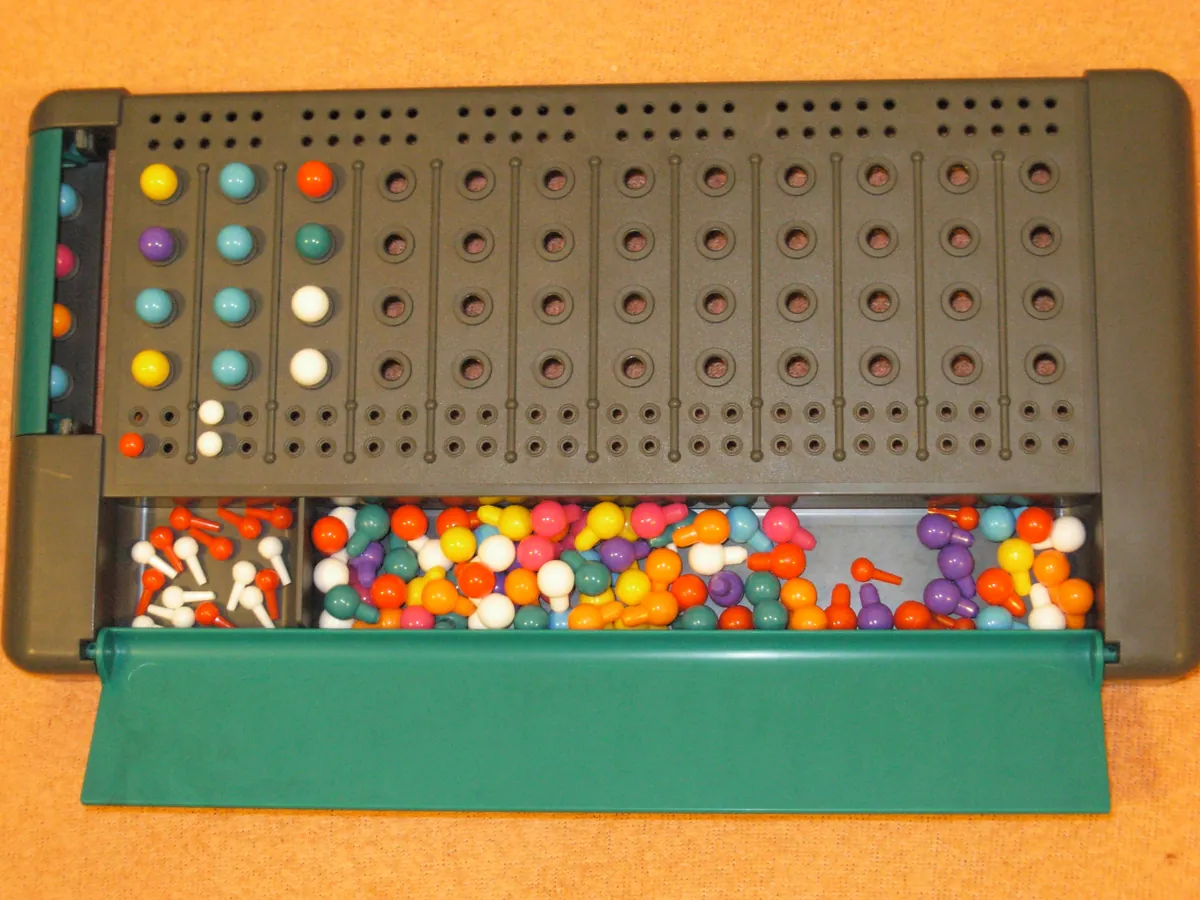 Puzzles
How to play Mastermind: feedback, repeats and useful guesses
Learn how black and white clues work, why repeated colours matter and how to choose informative guesses, with a complete feedback example.
ReadPuzzlesHow to solve Lights Out: chasing lights and using parity
Understand cancelling moves, row-by-row light chasing and why the first row may need adjustment, with a small 3×3 example.
ReadPuzzlesHow to solve Rich Games math crosswords
Learn left-to-right evaluation, inverse operations and number-bank reasoning. A worked example and the difference between crosswords and arithmetic sprints.
Read