
SUDOKU / RULES, HISTORY AND STRATEGY
How to solve Sudoku: singles, hidden singles and steady progress
Learn Sudoku rules, the Number Place story and three practical solving techniques, with a worked example and a simple practice plan.
Where the game came from
Sudoku has an American publishing history and a Japanese name. Dell says Number Place appeared in its magazines from 1979. Nikoli introduced the puzzle to Japanese readers in 1984 and shortened its longer title to Sudoku. Calling it an ancient Japanese game would therefore miss the actual publishing story.
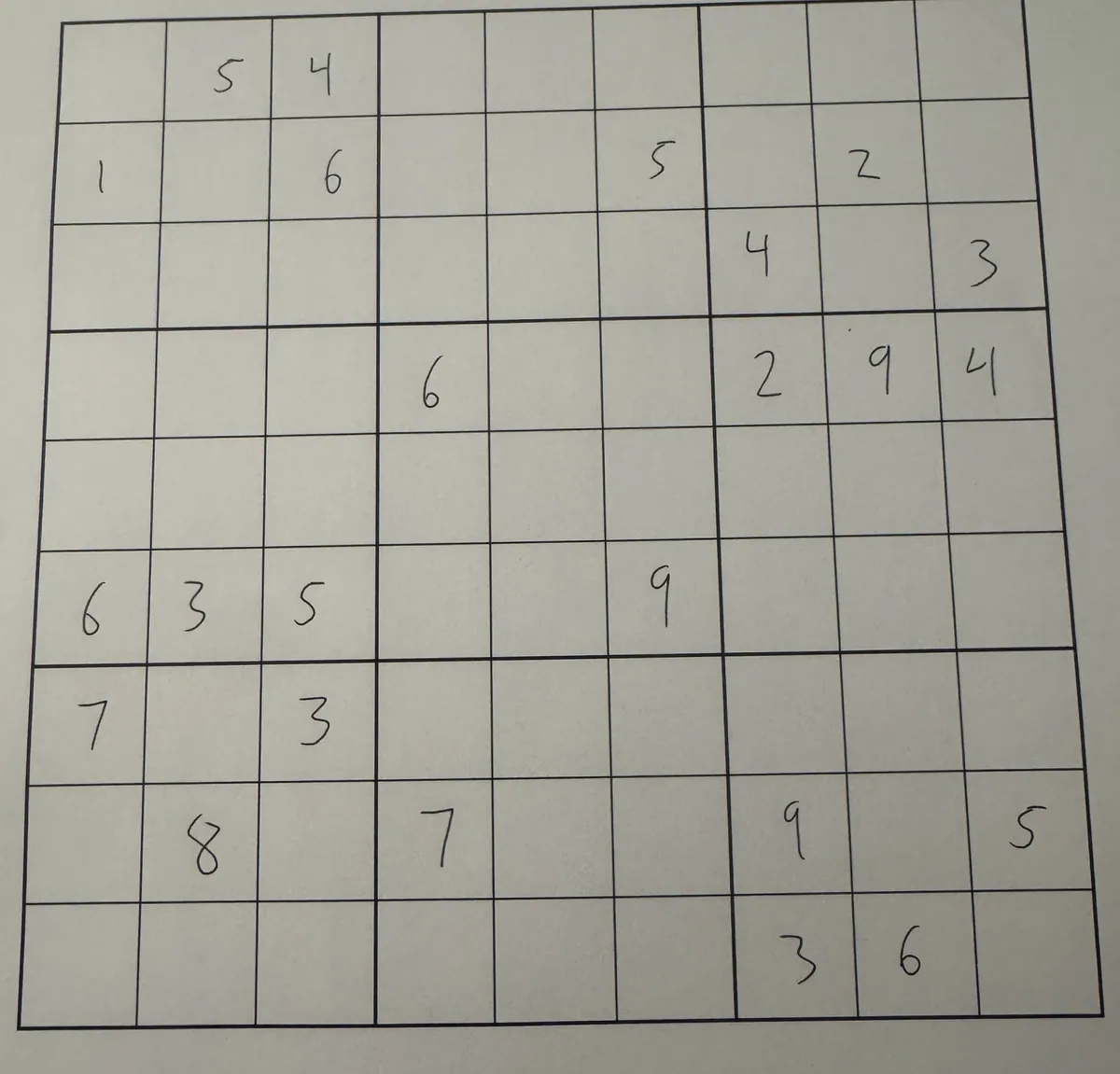
Loading the practice board…
Rules: three constraints at once
Fill a 9×9 grid with digits 1 through 9. Every digit must appear exactly once in each row, column and 3×3 box. You do not need to add anything: the digits act as nine different symbols. Solving means combining restrictions rather than doing arithmetic.
In Rich Games, select a digit and then a cell. An incorrect entry is rejected and counted as a mistake. Feedback catches slips, but it is more useful to explain why your chosen digit is forced before tapping.
Three techniques to learn first
Start with naked singles. List the digits missing from a row, then remove any already present in the cell’s column or box. If just one remains, the entry is proved. Scan nearby areas again after placing it: one new digit often starts a chain.
A hidden single reverses the question. Pick a digit and inspect every empty cell in a box. If only one can contain it, place it there even if that cell initially had several candidates. Next, try locked candidates: when all possible places for a digit in a box lie in one row, remove that digit from the rest of the row outside the box.
Worked example: why this cell must be 7
A row contains 1, 2, 3, 4, 5, 6 and 9, with two cells empty. It needs 7 and 8. The first empty cell’s column already contains an 8, so that cell must be 7. The other empty cell in the row must then be 8.
This is a local example rather than a complete puzzle. What matters is the sequence: identify the missing set, use a crossing constraint, then check the remaining cell. You never need to consult or guess the hidden solution.
Mistakes that interrupt a solve
Do not check only the row: a digit that fits there can still repeat in its column or box. Two candidates do not automatically justify a guess. Switch to another region or ask where one particular digit can go.
Candidate lists become outdated as the grid changes. Revisit nearby candidates after every placement. If there are too many possibilities to remember comfortably, return to a nearly complete region with simpler constraints.
Practise in Telegram
Open Sudoku in Rich Games and choose an easy puzzle. Dedicate one game to naked singles, then another to hidden singles. Move up a level once you can explain most placements without relying on the bot to test them.
Daily offers a convenient regular practice session. Pay attention to accuracy and the technique you recognised, as well as your finishing time. A slower proved move teaches more than a fast unsupported guess.
After finishing, revisit one moment when a move seemed unclear. Identify the constraint that unlocked it: an occupied column, a unique place in a box or an interaction between candidates. Naming the reason makes the technique easier to recognise next time.
Sources and further reading
Another good read
 Puzzles
How to play Minesweeper: numbers, flags and safe deductions
Understand the eight neighbours, safe cells and overlapping regions. Includes Minesweeper history and a worked two-clue deduction.
Read Puzzles
How to solve nonograms: overlaps, gaps and picture logic
Learn nonogram history, block rules and the overlap technique with a worked example. Discover why empty cells matter as much as filled ones.
Read Puzzles
How to solve Kakuro: sums, combinations and intersections
Learn Kakuro rules, useful digit combinations and a worked intersection example, including how the Rich Games clue layout works.
Read