
RICH GAMES / CHOOSING A GAME
Daily puzzle games: what to try when you want more than Wordle
Choose daily puzzles by the kind of thinking you enjoy: words, numbers, pictures or small experiments. Includes Daily modes, reset times and spoiler etiquette.

One puzzle over coffee is a lovely format until finding your next game takes longer than playing it. If you want something beyond guessing words, start with the action you enjoy: spotting a pattern, combining constraints or slowly revealing a picture.
A daily puzzle and an ordinary game offer different pleasures
Daily describes a release schedule, not a genre. The puzzle belongs to a date: a particular board today, another tomorrow. An ordinary mode lets you choose a difficulty and start a fresh challenge. This matters when you want to compare notes with someone. A shared daily board gives you something specific to discuss; a regular puzzle gives you more control over what to play next.
Wordle is a familiar daily word game; the NYT Games collection also includes Connections, Spelling Bee and other formats. If vocabulary has lost its appeal, try a puzzle without letters. The official app listing describes daily games and ways to compare scores with friends. 1
Choose the kind of deduction you enjoy
Start with the experience you want rather than a claim about the “best brain game.” Sudoku asks you to rule out digits using overlapping constraints. Kakuro combines sums with a restriction on repeated digits. A nonogram turns numbered runs into a picture. Numbers do not always mean arithmetic: in Sudoku they mainly distinguish nine symbols, while Kakuro really does ask you to consider totals.
Minesweeper suits players who enjoy drawing local conclusions from nearby clues. Lights Out offers a different pleasure: one press changes several cells, so you investigate how a small system behaves. Mastermind lets you test a hypothesis against feedback. None of these needs to suit everyone. Disliking word games does not automatically mean that number puzzles will feel right.
| What you enjoy | Try | What to notice |
|---|---|---|
| Eliminating possibilities | Sudoku | Use the row, column and box together |
| Combining totals | Kakuro | A digit must satisfy both crossing runs |
| Revealing a picture | Nonogram | Leave gaps between separate runs |
| Reasoning about neighbours | Minesweeper | Consider groups of cells, not isolated guesses |
| Changing a system | Lights Out | A press affects neighbouring cells too |
Find something that fits a short break
Board size and difficulty are not the same thing. A tiny grid with awkward alternatives can take longer than a large grid with an obvious opening. For a first attempt, choose an easier level. Being able to explain a placement is a better starting point than trying to finish at someone else’s speed.
When you have only a few minutes, scan the board before acting. Find the most constrained area and make one justified move. If the next step needs extended investigation, it is fine to stop. Solving time depends on the individual puzzle and your experience; a genre name cannot guarantee a five-minute session. A small unfinished puzzle can still be an enjoyable break.
How Daily works in Rich Games
In Rich Games titles that offer Daily, the challenge is attached to the date and shared by players of that game. Starting an ordinary new game is a separate choice. You can learn the rules there before trying the daily board. Daily puzzles currently use Medium difficulty. Check the menu of the individual game: Daily is not available in every title in the collection.
The date changes at 00:00 UTC. That is 03:00 in Moscow; elsewhere, check your local offset, including seasonal changes. An unfinished previous-day Daily can no longer be completed for credit after that boundary. Avoid starting immediately before the reset if you intend to finish later. Streaks reflect consecutive completed Daily dates. Missing a day may break the current streak without taking away the enjoyment of previous solutions.
Boards appear directly in Telegram messages. Sudoku and Kakuro use a number selection followed by a cell selection; other titles have their own controls. Open a game page here, try the example and follow the link to the bot.
Build a small rotation instead of a checklist
Try an easy puzzle in three contrasting genres, such as Sudoku, Nonogram and Lights Out. Tomorrow, return to whichever made you want another move. Keep the game for that feeling, rather than for an obligation to complete every daily task. We are not promising memory improvements or medical benefits: the aim here is simply to find a game you enjoy.
If the daily board leaves you wanting more, an ordinary mode gives you another challenge. If you are done, let that be enough. A useful daily selection may be one favourite and one alternative for a different mood. A catalogue helps you find those games; it does not need to turn a spare moment into another list of commitments.
Sources and further reading
Try a game, learn the rules




 Puzzles
How to solve Sudoku: singles, hidden singles and steady progress
Learn Sudoku rules, the Number Place story and three practical solving techniques, with a worked example and a simple practice plan.
ReadPuzzlesHow to solve Kakuro: sums, combinations and intersections
Learn Kakuro rules, useful digit combinations and a worked intersection example, including how the Rich Games clue layout works.
ReadPuzzlesHow to solve nonograms: overlaps, gaps and picture logic
Learn nonogram history, block rules and the overlap technique with a worked example. Discover why empty cells matter as much as filled ones.
ReadPuzzlesHow to play Minesweeper: numbers, flags and safe deductions
Understand the eight neighbours, safe cells and overlapping regions. Includes Minesweeper history and a worked two-clue deduction.
ReadPuzzlesHow to solve Lights Out: chasing lights and using parity
Understand cancelling moves, row-by-row light chasing and why the first row may need adjustment, with a small 3×3 example.
Read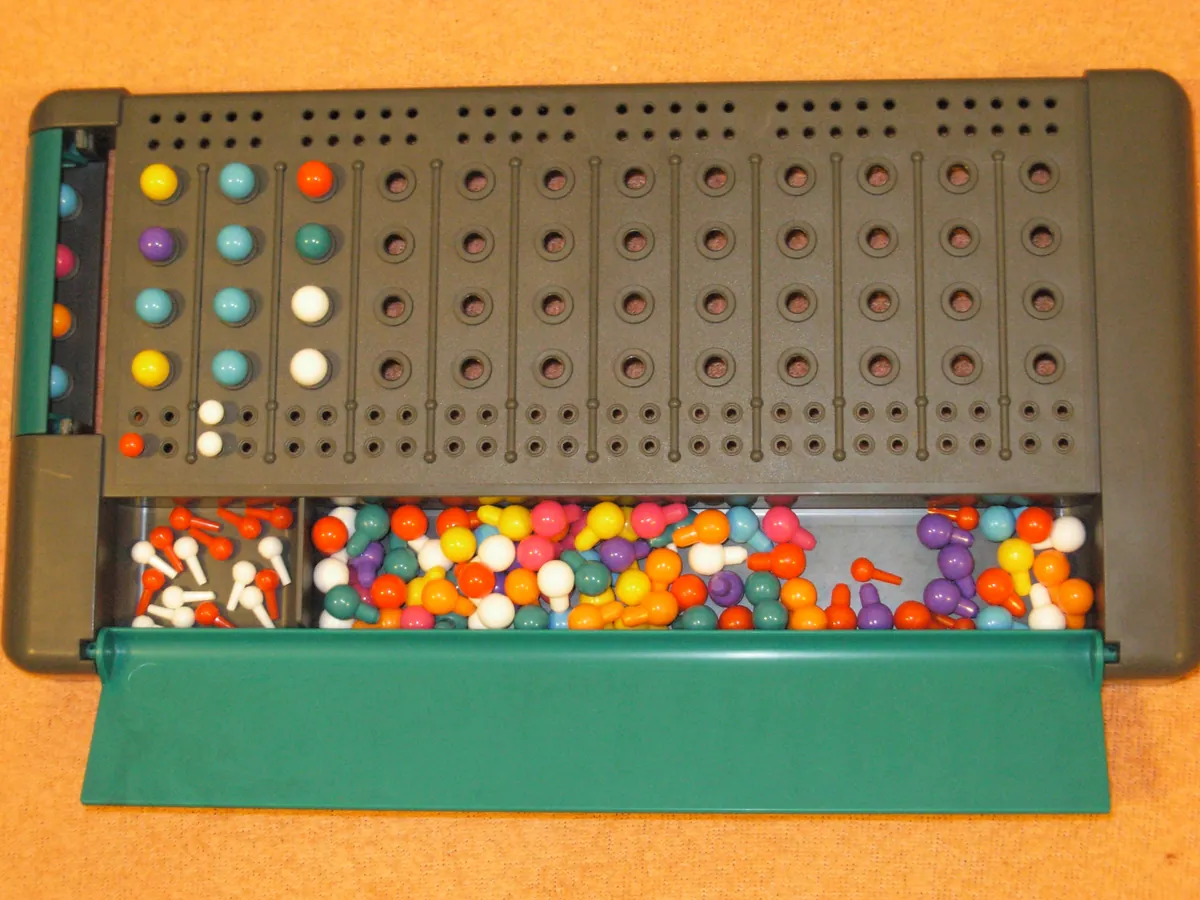 Puzzles
How to play Mastermind: feedback, repeats and useful guesses
Learn how black and white clues work, why repeated colours matter and how to choose informative guesses, with a complete feedback example.
Read