
KAKURO / RULES, HISTORY AND STRATEGY
How to solve Kakuro: sums, combinations and intersections
Learn Kakuro rules, useful digit combinations and a worked intersection example, including how the Rich Games clue layout works.
Where the game came from
Kakuro belongs to the magazine tradition of number puzzles. Dell publishes this type as Cross Sums, while Nikoli records its introduction in issue 11 of its own magazine. The names share the same essential idea: a sum restricts a group, and crossing groups identify individual digits.
Loading the practice board…
Rules and clue directions
Fill white cells with digits 1 through 9. Each continuous horizontal or vertical run must add up to its clue, with no repeated digits inside that run. Every white cell belongs to both a horizontal and a vertical constraint.
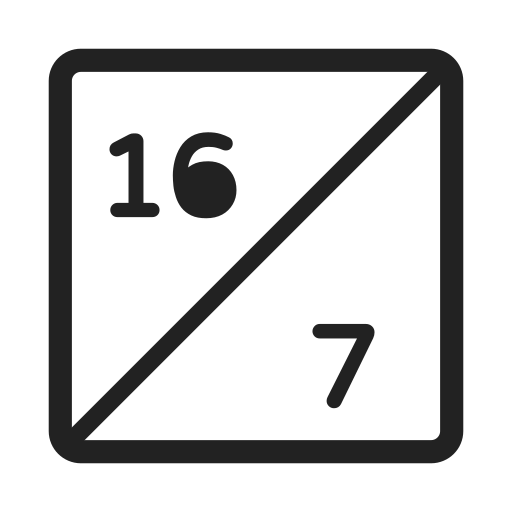
In Rich Games, the upper number in a clue cell gives the sum to the right; the lower number gives the sum downward. This differs from the diagonally divided clue cells common in print. Select a digit, then a cell. Incorrect entries are rejected and counted as mistakes.
Start with restricted combinations
A two-cell sum of 3 can only use 1 and 2. A sum of 4 uses 1 and 3; a sum of 17 uses 8 and 9. With three cells, 6 requires 1, 2 and 3, while 24 requires 7, 8 and 9. These are useful sets to recognise immediately.
A set does not establish the order. To place a digit, intersect the possibilities from its horizontal and vertical runs. After each placement, subtract the known digit from the sum, reduce the number of empty cells and exclude digits already used in that run.
Check bounds using the smallest and largest sums available from distinct remaining digits. If two cells must total 18 but 9 is already used in their run, the proposal is impossible. Do not try to rescue it by repeating a digit or introducing zero.
Worked example: sums of 3 and 4 cross
A two-cell horizontal run totals 4, so its digit set is {1, 3}. A two-cell vertical run through the first cell totals 3, so its set is {1, 2}. The only shared digit is 1. Place it at the intersection.
The horizontal run now needs 3 in its remaining cell, and the vertical run needs 2. One deduction fills three cells. You did not need information from the far side of the grid: comparing two small sets was enough.
Common confusion with Sudoku
The no-repeat rule applies to a continuous run, rather than the entire visual row or column. A digit may occur again beyond a black clue cell. There is no Sudoku-style 3×3 box rule either.
Zero is not allowed, and neither is repeating a digit within one sum. The clue number is not part of the run: it specifies the target. Before entering a digit, check both sums and the no-repeat restriction in both directions.
Practise from short runs to larger boards
Open Kakuro in Puzzles and begin with a 5×5 board. Find the extreme sums and short runs first. In your next game, reduce completed portions to a remaining sum rather than adding the whole run repeatedly.
Move to 7×7 and 9×9 once you can comfortably separate a digit set from its order. When stuck, look for the intersection of two small candidate sets: it often provides the next proved entry.
Sources and further reading
Another good read
 Puzzles
How to solve Sudoku: singles, hidden singles and steady progress
Learn Sudoku rules, the Number Place story and three practical solving techniques, with a worked example and a simple practice plan.
Read Puzzles
How to play Minesweeper: numbers, flags and safe deductions
Understand the eight neighbours, safe cells and overlapping regions. Includes Minesweeper history and a worked two-clue deduction.
Read Puzzles
How to solve nonograms: overlaps, gaps and picture logic
Learn nonogram history, block rules and the overlap technique with a worked example. Discover why empty cells matter as much as filled ones.
Read