
NONOGRAM / RULES, HISTORY AND STRATEGY
How to solve nonograms: overlaps, gaps and picture logic
Learn nonogram history, block rules and the overlap technique with a worked example. Discover why empty cells matter as much as filled ones.
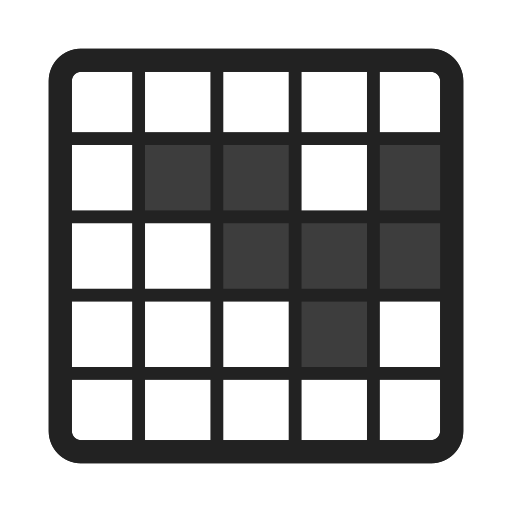
Where the game came from
Puzzle Museum traces Non Ishida’s window-picture idea to a 1987 competition involving lit and unlit skyscraper windows. Tetsuya Nishio independently published similar puzzles around the same period. In 1990, James Dalgety proposed the name Nonogram and helped bring the puzzles to British newspapers. The genre also appears under names such as griddlers and picture logic.
Loading the practice board…
Read the clues in order
Numbers describe consecutive filled blocks in the order shown. A clue of “2 1” means two filled cells, at least one empty cell, then one more filled cell. Any number of empty cells may precede the first block or follow the last. Diagonal contact between filled cells is not restricted by itself: clues describe rows and columns only.
In Rich Games, switch between fill and cross modes. A cross records your decision that a cell is empty. An incorrect fill counts as a mistake, while your manually placed crosses are not checked. A cross is therefore not automatically confirmation from the bot.
Overlap: find what must be filled
Imagine pushing a block as far left and as far right as it can go. Any cells covered in both extreme positions are filled in every possible placement. With several blocks, preserve their order and mandatory separating gaps; do not move each block independently.
After a deduction in a row, inspect the crossing columns. Newly filled cells restrict vertical block positions, while proved empty cells divide a line into shorter segments. Crosses can reduce uncertainty just as effectively as filled cells.
Worked example: a block of 4 in a line of 5
A single block of length 4 has only two placements: cells 1–4 or cells 2–5. The overlap consists of cells 2, 3 and 4. Fill those three immediately; both ends are still undecided.
Suppose a crossing column later proves cell 1 empty. The block must now occupy cells 2–5, so fill cell 5. The solution comes from combining two directions, rather than guessing what picture is emerging.
Another quick case is a five-cell line with the clue “2 2”. The blocks and their required gap consume the entire line: 2 + 1 + 2 = 5. Fill two cells, cross the middle cell, then fill the last two.
Why guessing the picture is risky
Do not complete an apparently symmetrical object just because it looks likely. The clues take priority over the expected image. Never merge consecutive blocks without an empty gap or reverse their order. “1 3” and “3 1” describe different lines.
A cross can reflect a reasoning error of your own. If it conflicts with a proved block, revisit the deduction that produced it. In Rich Games, tapping a manually placed cross again removes it.
A short practice plan
Choose an easy nonogram in Puzzles. First find lines where block lengths plus minimum gaps exactly equal the line length. Then look for overlaps and alternate between rows and columns.
Before filling a cell, state the reason: “every placement of this block includes it”. After finishing, recall the most useful empty region you found. This trains you to recognise structure rather than simply tap cells quickly.
Sources and further reading
Another good read
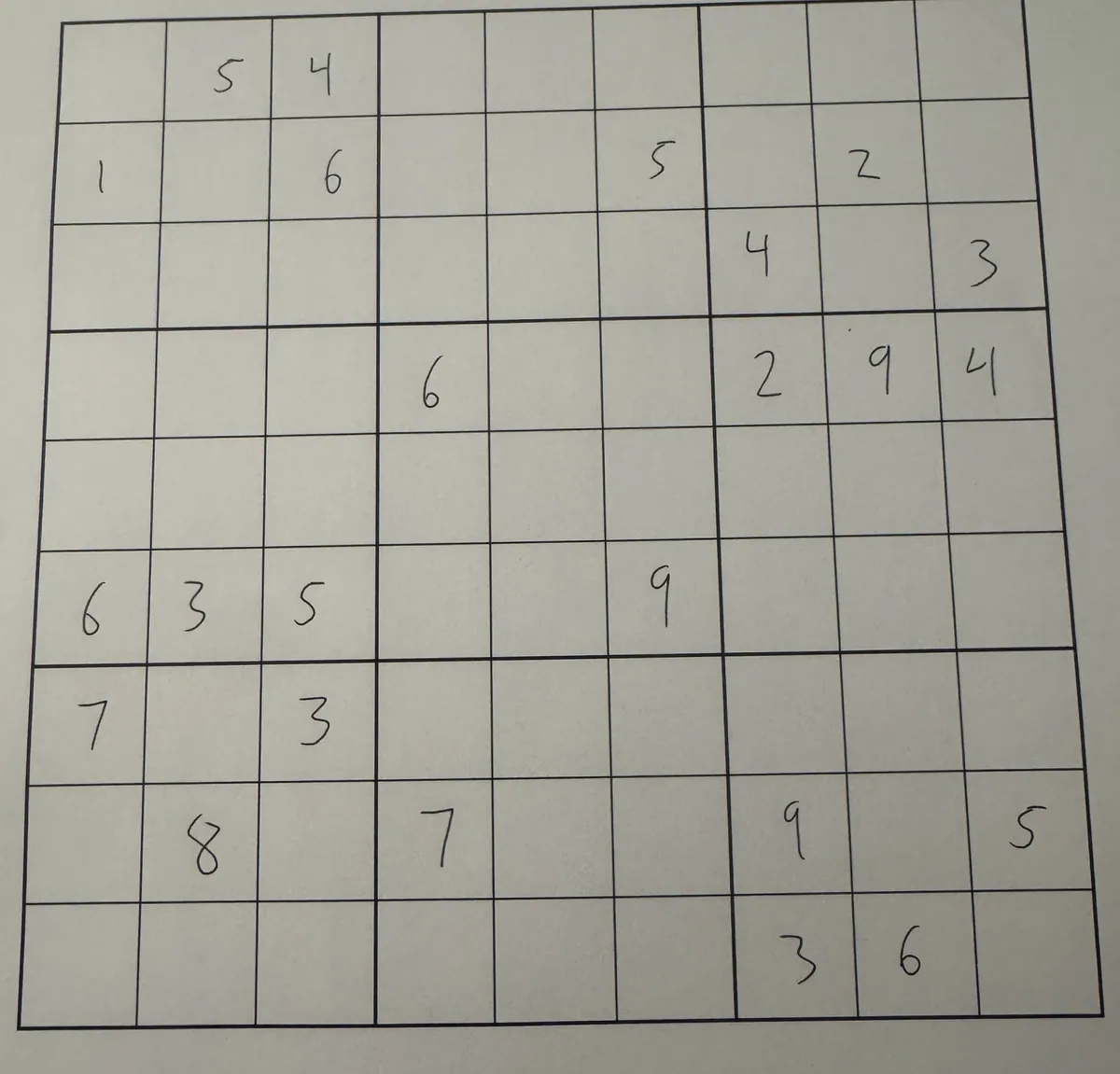 Puzzles
How to solve Sudoku: singles, hidden singles and steady progress
Learn Sudoku rules, the Number Place story and three practical solving techniques, with a worked example and a simple practice plan.
Read Puzzles
How to play Minesweeper: numbers, flags and safe deductions
Understand the eight neighbours, safe cells and overlapping regions. Includes Minesweeper history and a worked two-clue deduction.
Read Puzzles
How to solve Kakuro: sums, combinations and intersections
Learn Kakuro rules, useful digit combinations and a worked intersection example, including how the Rich Games clue layout works.
Read