
MEMORY PAIRS / RULES, HISTORY AND STRATEGY
How to play Matching Pairs: remember positions and choose accurately
Practical memory-game techniques: coordinates, small board regions and better second-card choices for solo, Daily and games with friends.

Where the game came from
Games built around finding matching pairs have several names. Museum Ravensburger traces its memory edition to William Hurter’s proposed “Game of Twins” and the first published edition in 1959. That documents one particular edition, rather than establishing the invention of every matching-pairs game.
Rich Games uses themed cards while keeping the same underlying task. The useful skill is connecting each image with a position, rather than reacting quickly. You can play solo, open the Daily game or challenge a friend, learning from their reveals as well as your own.
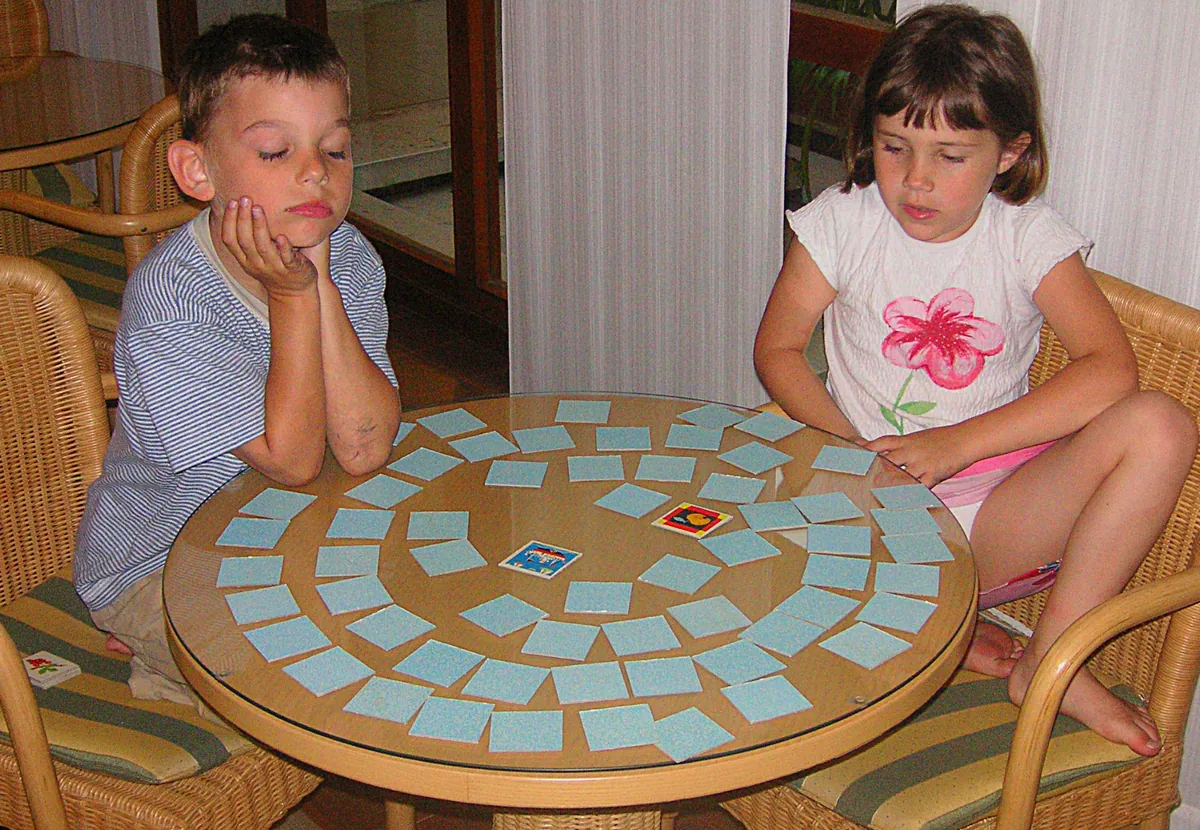
Loading the practice board…
Understand a complete attempt
Turn over one card, then a second. Matching cards remain found; remember the positions of cards that do not match. The 4×3 board contains six pairs, 4×4 contains eight and 6×4 contains twelve. Each image appears twice in a deal, so a completed pair no longer needs searching for.
In Rich Messages, a mismatched pair does not disappear on a timer. Both cards remain visible until the next tap. Use that pause to fix their positions in memory instead of rushing to beat an animation. In a game with a friend, their reveals provide equally useful information about the hidden layout.
Remember an address with every picture
Give rows numbers and columns letters in your head. “Cat at B2” is more useful than “there was a cat somewhere.” You do not have to recite every coordinate: dividing the board into left and right halves or small rectangles also works. What matters is a consistent way to describe a position.
After revealing the first card, ask whether you have already seen its partner. If you know the address, take the exact pair. If you do not, reveal a new card and remember both locations. Choosing a known, incompatible card adds no new information and wastes the attempt.
Turn a mismatch into a future exact match
Imagine your first attempt reveals a cat at B2 and an apple at D1. They do not match. Later you uncover an apple at A3. Your correct second choice is D1, because that address is already known. The failed opening attempt has become useful information for a precise decision.
Now suppose your first reveal is a completely new image. If unknown cards remain, choosing a new position teaches you something; turning over the known cat at B2 cannot produce a match. However, when both cards of a pair are already known, collect them first. Exploring should not displace a guaranteed matching pair.
Preserve your mental map as pairs disappear
The gaps left by completed pairs can make the layout feel different. Keep counting coordinates from the original grid rather than the remaining cards. Do not change your naming system halfway through the deal. In PvP, another trap is remembering only your own turns: an opponent’s unsuccessful attempt can reveal exactly the addresses you need.
Increase the board size gradually
Begin on 4×3 and identify both addresses after every mismatch. Move to 4×4 while keeping the same coordinate system. In Daily, focus on thoughtful attempts; with a friend, focus on watching continuously. Compare your decisions on similar boards rather than treating every result as a pure measure of memory: different deals involve different amounts of luck.
Sources and further reading
Another good read
 Puzzles
How to solve Sudoku: singles, hidden singles and steady progress
Learn Sudoku rules, the Number Place story and three practical solving techniques, with a worked example and a simple practice plan.
Read Puzzles
How to play Minesweeper: numbers, flags and safe deductions
Understand the eight neighbours, safe cells and overlapping regions. Includes Minesweeper history and a worked two-clue deduction.
Read Puzzles
How to solve nonograms: overlaps, gaps and picture logic
Learn nonogram history, block rules and the overlap technique with a worked example. Discover why empty cells matter as much as filled ones.
Read